2026 Translation Technology Trends: What's Next for Document Translation
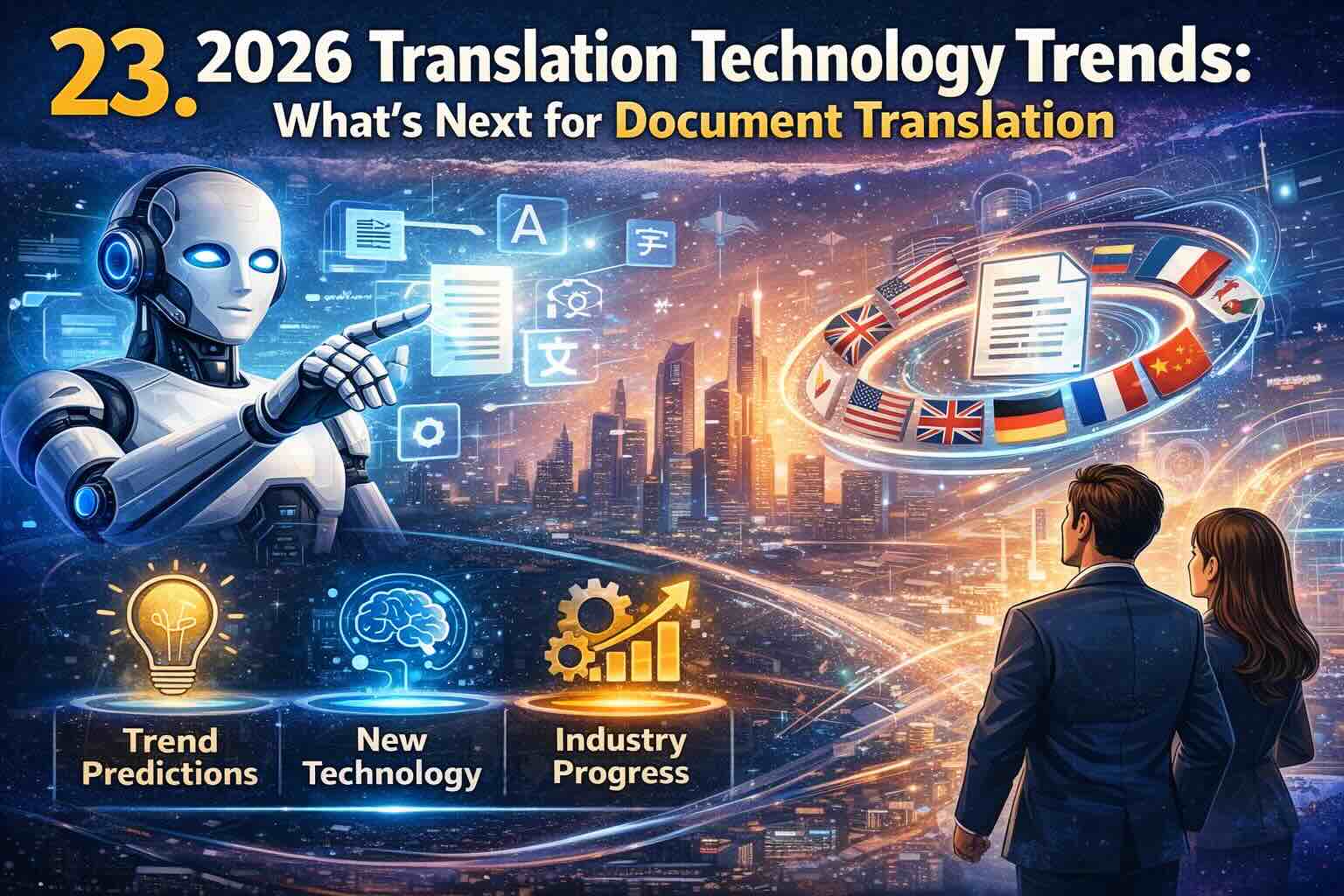
Discover the cutting-edge translation technology trends shaping 2026. From advanced AI models to real-time multimodal translation, explore how emerging technologies will transform document translation for businesses worldwide.
The translation industry is experiencing its most transformative period in history. As we move through 2026, artificial intelligence, neural networks, and advanced machine learning are revolutionizing how businesses approach document translation. What seemed like science fiction just five years ago is now becoming everyday reality.
Here are the top translation technology trends shaping 2026 and what they mean for your business.
The Translation Technology Revolution of 2026
Translation technology has evolved from simple word-for-word substitution to sophisticated AI systems that understand context, culture, and intent. In 2026, we're seeing breakthroughs that are fundamentally changing what's possible.
The shift: Translation is no longer just about converting text from one language to another. It's about preserving meaning, maintaining brand voice, adapting to cultural contexts, and delivering instant, accurate results at scale.
Top 10 Translation Technology Trends for 2026
1. Next-Generation Neural Machine Translation (NMT)
What's new: NMT systems in 2026 are powered by transformer models with billions of parameters, trained on massive multilingual datasets.
Key advances:
- Context windows: Modern NMT can process entire documents at once, understanding context across hundreds of pages
- Domain adaptation: AI models that automatically detect and adapt to specific industries (legal, medical, technical)
- Style transfer: Ability to match your company's communication style and brand voice
- Rare language pairs: High-quality translation between previously difficult language combinations
- Error correction: Self-correcting AI that identifies and fixes its own mistakes
Business impact: Higher accuracy, more natural translations, and reduced need for human post-editing.
2. Real-Time Document Translation
The trend: Instant translation is no longer limited to simple text. In 2026, complex business documents translate in real-time while preserving complete formatting.
What's possible now:
- Translate 100-page financial reports in under 60 seconds
- Live translation of collaborative documents during editing
- Instant multilingual versions as you type
- Real-time subtitle generation for video content
- Simultaneous translation during virtual meetings
Business impact: Dramatically accelerated international collaboration and faster time-to-market for global initiatives.
3. Multimodal Translation Systems
The innovation: 2026's translation systems don't just process text—they understand images, audio, video, and text simultaneously.
Capabilities:
- Visual translation: Automatically translate text within images, infographics, and charts
- Audio transcription + translation: Convert speech to translated text in real-time
- Video translation: Translate video content including on-screen text, speech, and captions
- Context from visuals: Use images to understand ambiguous text meaning
- Integrated workflows: Single platform for all content types
Business impact: One solution for all translation needs, regardless of content format.
4. Context-Aware AI Translation
The advancement: AI systems that truly understand business context, not just language.
How it works:
- Industry knowledge: Pre-trained on industry-specific corpora (legal, medical, financial)
- Company context: Learns your products, services, and terminology
- Cultural awareness: Automatically adapts for cultural nuances and local markets
- Intent recognition: Understands the purpose (marketing vs. legal vs. technical)
- Historical learning: Improves based on your previous translations
Business impact: Translations that sound like they were written by someone who understands your business.
5. Specialized Industry Models
The shift: Moving away from one-size-fits-all to purpose-built translation engines.
Specialized models for:
- Legal translation: Trained on contracts, agreements, court documents
- Medical translation: Pharmaceutical, clinical trials, patient records
- Technical translation: Engineering specs, software documentation, manuals
- Financial translation: Reports, statements, regulatory filings
- Marketing translation (transcreation): Brand messaging, advertising, creative content
- E-commerce translation: Product descriptions, reviews, checkout flows
Business impact: Accuracy rates approaching human expert translators in specialized domains.
6. Enhanced Privacy and Security
The priority: As AI translation becomes more powerful, data protection becomes more critical.
2026 security features:
- On-device translation: Processing happens locally, data never leaves your infrastructure
- End-to-end encryption: All translations encrypted in transit and at rest
- Zero-knowledge architecture: Translation providers can't access your content
- Automatic data deletion: Immediate permanent deletion after translation
- Compliance automation: Built-in GDPR, HIPAA, SOC 2 compliance
- Audit trails: Complete logs of who accessed what and when
- Private model training: Company-specific models trained only on your data
Business impact: Confidential document translation without security compromises.
7. Seamless Integration and Automation
The trend: Translation embedding directly into existing workflows.
Integration points:
- Microsoft Office: Translate directly within Word, Excel, PowerPoint
- Google Workspace: Real-time translation in Docs, Sheets, Slides
- CRM systems: Salesforce, HubSpot, Zendesk multilingual support
- Content management: WordPress, Drupal, Contentful automatic translation
- E-commerce platforms: Shopify, WooCommerce, Magento localization
- Project management: Asana, Jira, Monday.com translated workflows
- APIs and webhooks: Custom integrations with any business system
Business impact: Translation happens automatically where and when you need it, no manual steps.
8. Quality Metrics and Transparency
The demand: Businesses want to know exactly how good their translations are.
New quality standards:
- Confidence scores: AI provides certainty ratings for each translation
- Automated quality assessment: AI evaluates translation quality against human benchmarks
- Explainable AI: Systems explain why they translated something a certain way
- Alternative suggestions: Multiple translation options with context
- Human-in-the-loop: Flag uncertain translations for human review
- Continuous improvement: Quality metrics feed back into model training
Business impact: Transparency and control over translation quality.
9. Collaborative Translation Platforms
The evolution: Translation as a team sport, not a solo activity.
Collaboration features:
- Real-time co-translation: Multiple people reviewing and editing simultaneously
- Translation memory sharing: Team-wide consistency and efficiency
- Terminology management: Shared glossaries across organization
- Review workflows: Multi-stage approval processes
- Version control: Track changes and revert when needed
- Comments and suggestions: Contextual feedback on translations
- Role-based permissions: Control who can translate, review, approve
Business impact: Better translations through teamwork and collective knowledge.
10. Sustainable and Efficient Translation
The awareness: Environmental impact of AI is becoming a business consideration.
Sustainability initiatives:
- Energy-efficient models: Smaller, optimized AI that uses less computing power
- Edge computing: Processing on local devices instead of data centers
- Carbon-neutral translation: Offsetting environmental impact
- Optimized workflows: Reduce redundant translations and waste
- Translation memory: Reuse previous translations instead of retranslating
Business impact: High-quality translation with lower environmental footprint.
Emerging Technologies on the Horizon
Beyond 2026, these technologies are in development:
Quantum Translation Computing
Quantum computers could revolutionize translation by processing exponentially more language patterns simultaneously, enabling perfect context understanding.
Brain-Computer Interfaces
Direct neural translation could bypass text entirely, translating thoughts and intent across languages.
Augmented Reality Translation
AR glasses that overlay real-time translations on physical documents and signs you're looking at.
Emotional Intelligence in Translation
AI that detects and preserves emotional tone, sarcasm, humor, and subtle communication nuances.
What These Trends Mean for Businesses
Opportunities
- Global expansion: Enter new markets faster with instant, high-quality localization
- Cost reduction: Automation reduces translation costs by 60-80%
- Speed to market: Launch products globally simultaneously
- Better customer service: Support customers in their native language 24/7
- Competitive advantage: Operate globally as easily as locally
- Compliance: Meet regulatory requirements across jurisdictions
Challenges to Address
- Quality control: Ensuring AI translations meet business standards
- Cultural sensitivity: Avoiding mistranslations that offend or confuse
- Change management: Training teams on new translation workflows
- Technology selection: Choosing the right translation platform
- Integration complexity: Connecting translation with existing systems
How to Prepare for the Future of Translation
1. Audit Your Current Translation Needs
Understand:
- Volume of content requiring translation
- Languages and language pairs needed
- Document types and formats
- Quality requirements by content type
- Speed and turnaround expectations
- Budget and resource constraints
2. Evaluate Modern Translation Solutions
Look for platforms offering:
- AI-powered neural machine translation
- Format preservation (Word, Excel, PowerPoint, PDF)
- Security and compliance features
- Integration with your existing tools
- Quality metrics and transparency
- Scalability for future growth
3. Develop a Translation Strategy
- Content prioritization: What needs professional translation vs. machine translation
- Workflow design: How translation fits into content creation and approval
- Quality standards: Acceptable accuracy levels for different content types
- Team training: Upskilling staff on modern translation tools
- Measurement: KPIs for translation quality, cost, and speed
4. Start Small, Scale Smart
- Pilot with non-critical content
- Test different approaches and platforms
- Gather feedback from users and customers
- Measure results against legacy methods
- Gradually expand to more content types
- Continuously optimize based on data
5. Stay Informed
- Follow translation technology news
- Attend industry conferences and webinars
- Join translation technology communities
- Test new features as they're released
- Network with peers in similar industries
The Role of Human Translators in 2026
Important note: AI isn't replacing human translators—it's augmenting them.
Where humans remain essential:
- Creative content: Marketing, advertising, brand messaging
- Cultural adaptation: Localization requiring deep cultural knowledge
- High-stakes content: Legal contracts, medical documents, compliance
- Quality assurance: Reviewing and refining AI translations
- Edge cases: Unusual content, rare languages, specialized domains
- Strategic guidance: Advising on translation approach and quality
The hybrid model: AI handles the heavy lifting (speed, consistency, volume) while humans provide oversight, creativity, and cultural expertise.
Industry-Specific Implications
E-Commerce and Retail
Instant product description translation enables real-time global selling. Customer reviews automatically translated. Dynamic pricing and promotions localized by market.
Healthcare and Pharmaceuticals
Patient records translated securely for international care coordination. Clinical trial documentation in multiple languages simultaneously. Regulatory submissions expedited.
Legal Services
Contract review across languages using specialized legal AI. Due diligence accelerated with automated document translation. E-discovery in multilingual contexts.
Technology and Software
User interface localization automated. Documentation translated as it's written. Support tickets handled in any language.
Financial Services
Annual reports, financial statements, and regulatory filings translated while maintaining exact numerical accuracy. Market research and analysis across global markets.
EasyDocTranslate: Leading the 2026 Translation Revolution
At EasyDocTranslate, we're not just following these trends—we're implementing them today:
Advanced AI translation: Latest neural machine translation models trained on business documents deliver context-aware, accurate translations.
Perfect format preservation: Upload PDF, Word, Excel, or PowerPoint and receive perfectly formatted translated documents.
Enterprise security: End-to-end encryption, GDPR compliance, and automatic data deletion protect your confidential information.
Real-time processing: Most documents translated in seconds, not hours or days.
100+ languages: Comprehensive language support including rare language pairs.
Transparent pricing: Pay only for what you translate. €0.99 for the first page, €0.50 for each additional page. No subscriptions, no hidden fees.
The Future is Now
The translation technology trends of 2026 aren't distant possibilities—they're current realities. Businesses that adopt these technologies gain significant competitive advantages:
- Speed: Launch globally in weeks, not months
- Cost: Reduce translation expenses by 60-80%
- Quality: AI accuracy approaching human expert levels
- Scale: Translate unlimited content without capacity constraints
- Agility: Respond to global opportunities instantly
The question isn't whether to adopt modern translation technology—it's how quickly you can implement it before competitors do.
Ready to Experience the Future of Translation?
Try EasyDocTranslate and see how 2026's translation technology transforms your business:
- Upload your business document
- Experience AI-powered accuracy
- Receive perfectly formatted results
- All with enterprise-grade security
- At transparent, affordable pricing
Join thousands of forward-thinking businesses already using next-generation translation technology. Get started now or contact us to discuss your translation needs.
The future of translation is here. Are you ready?
Ready to Experience Professional Translation?
Try EasyDocTranslate's AI-powered service with support for 100+ languages and automatic format preservation
Translate a DocumentTools
Popular Translation Tools
Jump from our guides directly to the right document translator.
PDF Translator
Translate native and scanned PDFs with OCR.
Word Translator
Translate DOCX and DOC files while keeping formatting.
Excel Translator
Translate XLSX, XLS and CSV spreadsheets.
Scan Translator
Translate scanned documents, JPG and PNG images.
Traductor Online Gratis
Textos largos, PDF y documentos completos.
Traducción Inglés Español
Documentos PDF y Word con IA.
Traductor Inglés Español
Traduce textos largos y documentos completos.
Traductor de Documentos
PDF, Word, Excel y PowerPoint con IA.
Continue Reading
Explore more articles about document translation, AI technology, and multilingual content
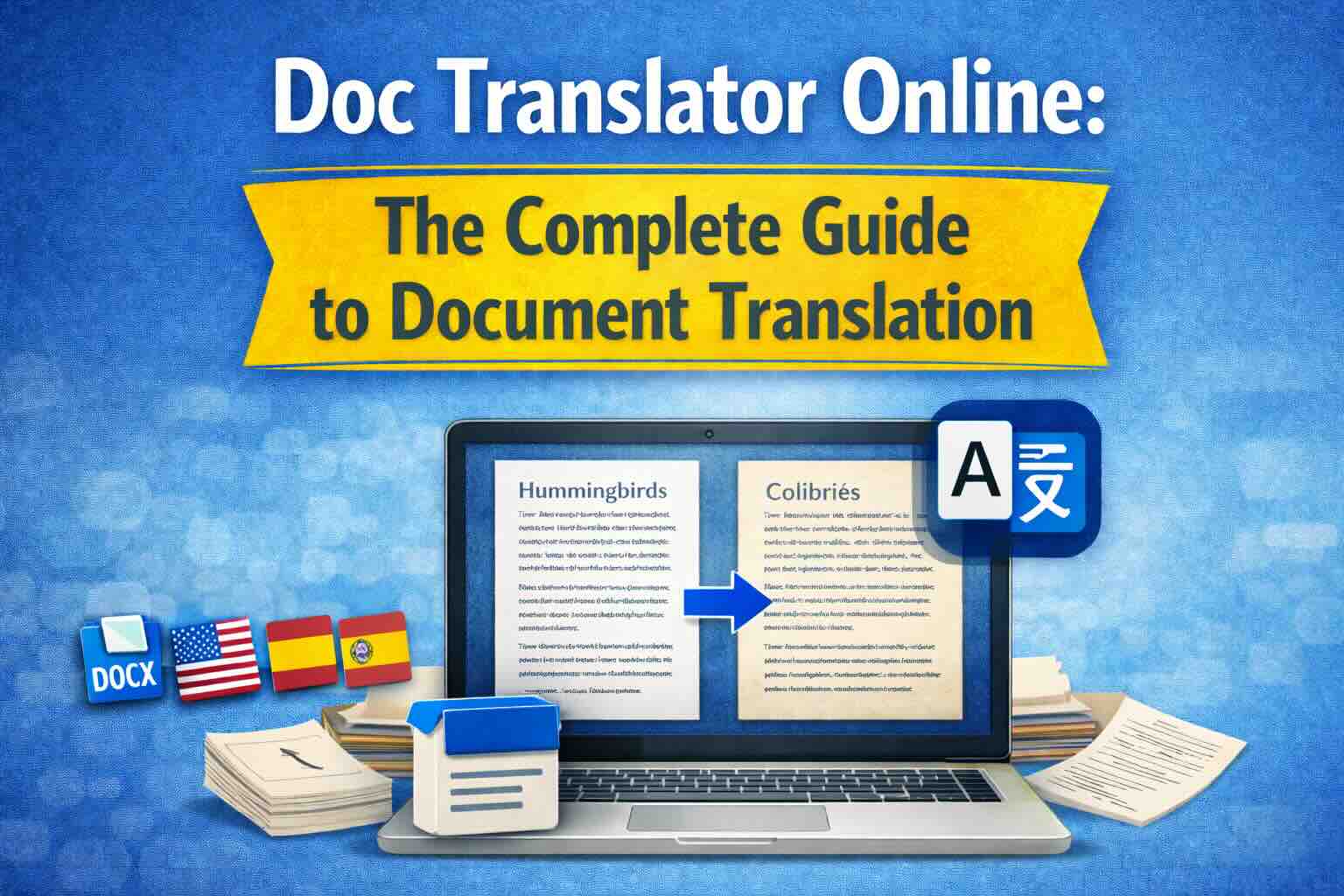
Doc Translator Online: The Complete Guide to Document Translation
Everything you need to know about online doc translators. Learn how to translate Word documents, PDFs, and other files while preserving formatting, using AI-powered translation technology.
Best Translator for Long Texts and Documents
Long text translation works best when the entire document is translated together, preserving context, terminology, formatting and structure.
Google Translate vs Document Translator: Which Is Better for Files?
Google Translate is useful for text, but document translators are built for PDF, Word, Excel, PowerPoint and scanned files with layout preservation.
DeepL vs Google Translate for Documents
DeepL and Google Translate are strong text translators, but document translation depends on file formats, previews, layout, OCR and workflow.